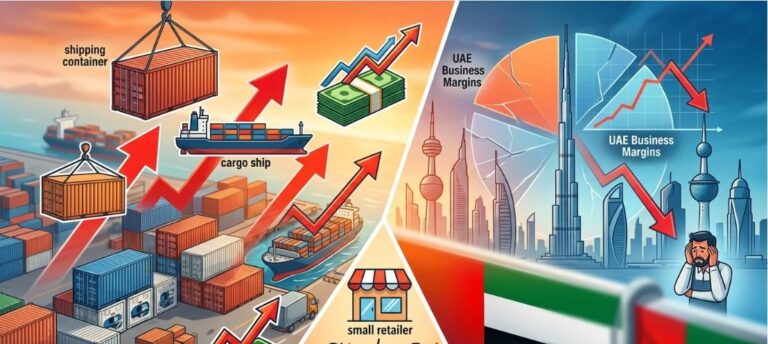
Rising shipping and import costs, driven by regional security risks and increased fuel prices, have doubled or tripled sea freight rates for UAE businesses. This development is putting pressure on supply chains, increasing logistics and warehousing expenses, and affecting the competitiveness of traders and exporters.
For businesses that depend on imports, these changes are shaping both short-term decisions and long-term strategies.
Key Factors Behind Rising Costs
Several factors are contributing to the increase in shipping and import costs:
- Regional security risks affecting shipping routes
- Increased fuel prices raising transportation expenses
- Changes in global trade routes leading to longer delivery times
- Higher insurance and operational costs
- Ongoing adjustments in global supply chains
These elements combined have made shipping more expensive and less predictable for many UAE businesses.
Increase in Freight Rates
One of the most noticeable impacts is the sharp rise in sea freight rates. In many cases, shipping costs are now two to three times higher than previous levels.
This increase directly affects importers who rely on consistent supply, as well as exporters aiming to stay competitive in global markets. Businesses are reviewing their pricing structures and improving financial oversight by strengthening their audit and compliance processes.
Freight Cost Comparison Table
| Shipping Route | Historical Cost (per 40ft container) | Current Cost (per 40ft container) | Increase Percentage |
|---|---|---|---|
| China to UAE | US$1,200 | US$2,600 | 116% |
| India to UAE | US$1,000 | US$2,200 | 120% |
| Europe to UAE | US$1,400 | US$2,800 | 100% |
Pressure on Supply Chains
Higher transportation costs are often accompanied by longer transit times. This is creating additional pressure on supply chains and making planning more complex.
Businesses are experiencing delays, fluctuating delivery schedules, and increased inventory management challenges. To handle these issues more effectively, many companies are turning to business advisory support to improve planning and reduce operational risks.
Impact on Time-Sensitive Goods
Industries that depend on timely delivery, especially those dealing with fresh agricultural products, are facing added challenges.
Extended shipping times can affect product quality and shelf life. To manage this, businesses are improving coordination, refining packaging methods, and optimizing logistics processes to reduce potential losses.
Rising Warehousing Costs
As shipping timelines become longer, businesses are storing goods for extended periods. This has increased demand for warehouse space across the UAE.
Higher storage costs are adding to overall expenses, encouraging companies to focus on efficient inventory management and better planning. Some businesses are also exploring internal storage solutions to gain more control over their supply chains.
Financial Planning and Cost Management
The increase in shipping, logistics, and storage costs is influencing financial planning across industries.
Businesses importing goods, including energy-related products, are managing higher expenses while maintaining operational stability. Many organizations are strengthening their financial compliance and audit support systems to ensure accurate reporting and better cost control.
In addition, companies involved in international trade are reviewing their transfer pricing policies to align with changes in import and logistics costs.
How Businesses Are Adapting
Despite these challenges, UAE businesses are adopting practical strategies to adjust:
Investment in Storage
Some companies are developing their own warehousing facilities to reduce reliance on third-party providers and improve supply chain efficiency.
Digital Logistics Tools
Real-time tracking systems and digital freight platforms are helping businesses gain better visibility into shipping operations.
Supplier Diversification
Companies are working with multiple suppliers to reduce dependency on a single source or route.
Cost Optimization
Efficient employee payroll management processes are helping businesses manage internal costs more effectively.
Improved Financial Systems
Adopting UAE compliant e-invoicing systems is helping organizations track expenses more accurately and streamline billing processes.
Role of Technology in Managing Change
Technology is playing an important role in helping businesses respond to these challenges. Data-driven tools and real-time tracking systems are improving supply chain visibility and enabling better decision-making.
These solutions allow companies to respond quickly to disruptions and maintain smoother operations.
UAE’s Continued Strength in Trade
Despite current challenges, the UAE remains a strong global trade hub. Its infrastructure, connectivity, and business-friendly environment continue to support growth and stability.
Businesses are building on these strengths by refining their logistics strategies and adopting more efficient operational processes.
Looking Ahead
In the coming years, businesses in the UAE are expected to focus on:
- Strengthening supply chain resilience
- Improving operational efficiency
- Increasing the use of digital tools
- Enhancing financial planning and compliance
These efforts can help organizations adapt to changing conditions and maintain long-term stability.
AI Overview
Rising shipping and import costs in the UAE are impacting supply chains, increasing operational expenses, and pushing businesses to adopt smarter logistics and financial strategies.
FAQs
What effects shipping costs?
Shipping costs are mainly affected by fuel prices, global demand, shipping route disruptions, container availability, and geopolitical conditions impacting logistics.
How does globalization affect the UAE?
Globalization strengthens the UAE’s trade, investment, and business opportunities by connecting it to international markets and boosting economic diversification.
Is VAT applicable on delivery charges in the UAE?
Yes, VAT is generally applicable on delivery charges in the UAE if they are part of a taxable supply and included in the invoice.
What is the taxable value of imported goods in the UAE?
The taxable value of imported goods includes the cost of goods, insurance, freight, and any customs duties incurred before entry into the UAE.
Conclusion
Rising shipping and import costs are influencing how businesses operate in the UAE. With freight rates increasing and supply chains adjusting, companies are focusing on efficiency, planning, and adaptability.
By improving financial oversight, optimizing operations, and adopting modern tools, businesses can manage these changes in a structured and balanced way.
Organizations that take a proactive approach will be better positioned to maintain stability and continue growing in a changing global environment.
If you are looking for professional support to manage your business operations, compliance, or financial strategies, you can get in touch with Dos Hermanos to explore solutions tailored to your needs.
Explore More UAE Compliance & Tax Insights
- Why Cloud‑Based Accounting is the Future for SMEs in the UAE: Streamline finances and boost growth with cloud accounting for UAE SMEs
- UBO Registration in UAE: Beneficial Ownership Guide: Learn the essential requirements for UBO compliance and corporate transparency in the UAE.
- VAT on Residential Real Estate in UAE: A clear guide to VAT rules, exemptions, and implications for property transactions.
- Tax Rules for QIFs and QLPs Under UAE Corporate Tax: Explore how corporate tax applies to investment funds and limited partnerships in the UAE.
- Free Zone Audit Requirements UAE: JAFZA, DMCC, DIFC Guide (2026): Navigate Free Zone audit rules in UAE with our 2026 JAFZA, DMCC, and DIFC compliance guide.